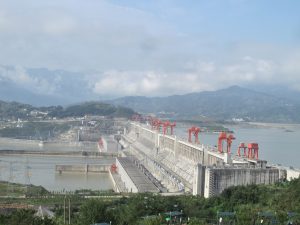
Overview
Technology: conventional storage.
Ownership: Ethiopian Electric Power Corp.
Why it matters
- The largest hydropower plant in Ethiopia by capacity, out of 13 operating hydropower facilities tracked in the country.
- Provides about 56% of Ethiopia's operating hydropower capacity and roughly 51% of all operating power capacity in the country in the dataset.
- Ranks #15 worldwide among hydropower facilities of the same status group by capacity.
- At a typical capacity factor of 40% for this technology, it would generate roughly 18 TWh of electricity a year (indicative estimate).
Hydropower provides renewable electricity and, where reservoirs exist, dispatchable output and storage that help stabilise the grid; output varies with rainfall and river flows.
Hydropower power in Ethiopia
Ethiopia has 9.20 GW of operating hydropower capacity across 13 plants in the Global Energy Monitor dataset — 91% of the country's total operating power capacity of 10.1 GW.
The hydropower pipeline in Ethiopia includes 2.16 GW under construction and 5.34 GW at earlier planning stages.
Other major hydropower plants in Ethiopia include Koysha hydroelectric plant (2.16 GW) and Gilgel Gibe III hydroelectric plant (1.87 GW).
How hydropower plants work
Hydropower plants convert the energy of falling or flowing water into electricity: water passes through turbines placed at the foot of a dam or along a diversion channel, and the turbines drive generators. Output depends on the height of the water drop (the head) and the volume of water flowing.
Reservoir and pumped-storage schemes can store energy and release it within minutes, which makes hydropower one of the most flexible sources on the grid. Annual generation varies with rainfall and snowmelt, and large dams can have significant effects on river ecosystems and downstream water use.
Technology at Grand Ethiopian Renaissance hydroelectric plant
Its reservoir allows water to be stored and power to be dispatched when it is most needed.
Location
Grand Ethiopian Renaissance hydroelectric plant is located in Benishangul-Gumuz Region, Ethiopia, at approximately 11.2165, 35.0936. Open the interactive map to explore nearby power plants, high-voltage lines and substations.
Ownership
Grand Ethiopian Renaissance hydroelectric plant is owned by Ethiopian Electric Power Corp. Across the dataset, Ethiopian Electric Power Corp is linked to 37 power plants with 9.89 GW of operating capacity.
Frequently asked questions
What is the capacity of Grand Ethiopian Renaissance hydroelectric plant?
Grand Ethiopian Renaissance hydroelectric plant has a capacity of 5.15 GW according to the latest Global Energy Monitor data.
What type of facility is Grand Ethiopian Renaissance hydroelectric plant?
Grand Ethiopian Renaissance hydroelectric plant is a hydropower plant. Its reservoir allows water to be stored and power to be dispatched when it is most needed.
Who owns Grand Ethiopian Renaissance hydroelectric plant?
Grand Ethiopian Renaissance hydroelectric plant is owned by Ethiopian Electric Power Corp.
Where is Grand Ethiopian Renaissance hydroelectric plant located?
It is located in Benishangul-Gumuz Region, Ethiopia. Approximate coordinates: 11.2165, 35.0936.
Is Grand Ethiopian Renaissance hydroelectric plant operational?
According to the latest data, Grand Ethiopian Renaissance hydroelectric plant is in operation. Operating means the facility is built and in commercial service.
When did Grand Ethiopian Renaissance hydroelectric plant start operating?
Start year: 2025. Current status: Operating.
How much electricity does Grand Ethiopian Renaissance hydroelectric plant generate?
Actual output data are not published for every plant. As an indicative estimate, Grand Ethiopian Renaissance hydroelectric plant would produce about 18 TWh a year, assuming a capacity factor of 40%, which is typical for this technology.
How big is Grand Ethiopian Renaissance hydroelectric plant compared with other facilities in Ethiopia?
Grand Ethiopian Renaissance hydroelectric plant ranks #1 by capacity among 13 comparable hydropower facilities tracked in Ethiopia.