US Senate Passes Sweeping Energy Permitting Reform Bill in 62-33 Vote

The U.S. Senate voted 62-33 on Wednesday night, November 19, to pass the Bipartisan American Affordability and Jobs Act (BAAJA), a sweeping overhaul of federal permitting rules for energy, transmission, mining and manufacturing projects — the kind of multi-year review process that recently delayed Revolution Wind’s path to full power off Rhode Island and that the European Union moved to streamline for its own wind and solar projects just last week. The bill, sponsored by Senators Shelley Moore Capito (R-WV), Sheldon Whitehouse (D-RI), Mike Lee (R-UT) and Martin Heinrich (D-NM), now moves to the House, where leaders hope to send it to President Trump before the end of the year.
A lopsided vote, a mixed coalition
The final tally understates how contested the bill has been. Most Republicans backed it, joined by 14 Democrats and one independent, while the bulk of the “no” votes came from Democrats, including Senators Ron Wyden and Jeff Merkley. The Senate had already cleared a procedural hurdle on November 9, voting 73-25 to begin debate, but that wider margin narrowed once amendments on tribal consultation and historic-preservation reviews failed to satisfy critics. Senator Catherine Cortez Masto had said she would oppose final passage unless provisions touching the National Historic Preservation Act were dropped; those objections were not resolved before the vote.
What the bill changes
BAAJA (S. 5653) rewrites parts of the National Environmental Policy Act (NEPA) review process that developers have long blamed for multi-year delays on power plants, transmission lines, pipelines, LNG terminals, mines and nuclear projects. According to its sponsors, the bill sets firmer deadlines for federal environmental reviews, limits the window for litigation challenging permits, and creates a more uniform process across agencies for designating a lead reviewer on multi-agency projects. The package also touches permitting for critical minerals mining and grid interconnection, two bottlenecks that developers across the renewable, nuclear and data-center sectors have flagged as slowing new capacity — a complaint echoed by reactor builders who have waited through the kind of drawn-out federal safety reviews the Nuclear Regulatory Commission runs for new nuclear projects.
Supporters frame the bill as overdue plumbing work for an energy system straining to keep pace with demand from AI data centers, reshored manufacturing and electrification, at a time when the United States is also managing the fallout from disrupted Gulf oil flows. Backers argue that long queues for transmission and generation permits have become one of the clearest brakes on adding capacity, regardless of the technology involved.
Why some lawmakers and advocacy groups are opposed
Opponents, largely environmental and tribal advocacy groups echoed by Senate Democrats, argue the bill narrows public comment windows and limits the ability of tribes and local communities to contest projects before they are approved. Critics have also argued that, because fossil fuel and mining projects are typically further along in the permitting pipeline than newer clean-energy proposals, a faster, narrower review process could end up benefiting incumbent oil, gas and mining developments more than emerging technologies. The bill’s sponsors dispute that the changes favor one energy source over another, noting that transmission and renewable permitting bottlenecks were a central complaint from clean-energy developers during the bill’s drafting.
What happens next
The House must still act, and on a compressed year-end calendar. Speaker Mike Johnson has said he expects to have the votes to pass the plan, though the chamber has previously advanced its own, different permitting bill and will need to reconcile the two versions or take up the Senate’s text directly. Any gap between the chambers would need to be resolved before the current Congress adjourns, and the White House has signaled it wants a bill on the president’s desk this year. If the House passes the Senate version unchanged, no conference committee would be needed and the bill could move to signature quickly; if it amends the text, the two chambers would need another round of negotiation with little time left on the calendar.
The vote lands at a moment when U.S. energy policy is increasingly shaped by competing pressures: a push to add gas, nuclear and grid capacity quickly to meet data-center and industrial demand, continued buildout of wind and solar, and a foreign-policy backdrop in which Gulf supply disruptions have already pushed Washington to look for ways to accelerate domestic energy infrastructure. Permitting reform has been debated in Congress for years without reaching the president’s desk; this is the furthest a comprehensive version has advanced since the effort began under the previous Congress.
Sources
- NBC News, “Senate passes sweeping bill simplifying permitting rules to build in America,” November 20, 2026 — vote tally and bill mechanics.
- Axios, “Senate passes Trump-backed permitting bill,” November 20, 2026 — coalition breakdown and next steps.
- Deseret News, “Permitting bill passes through the Senate despite some opposition,” November 20, 2026 — state-level reaction and opposition details.
- Axios, “Senate advances bipartisan permitting bill in key test vote,” November 9, 2026 — procedural vote and tribal-consultation objections.
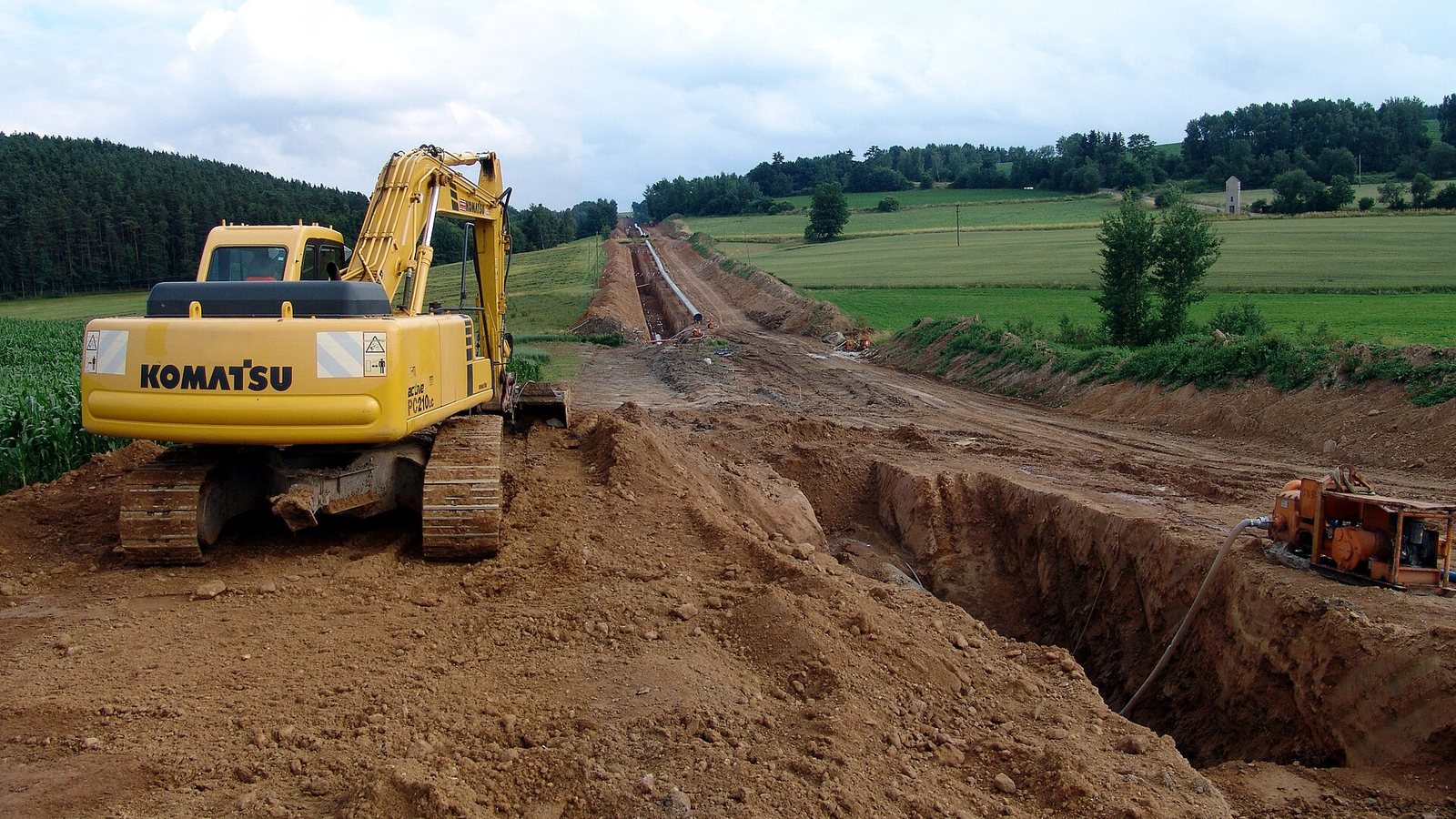
Illustrative image. Photo: btr, CC BY-SA 2.5, via Wikimedia Commons — source