TotalEnergies Scraps $16 Billion Green Hydrogen Project in Southern Chile

TotalEnergies’ Chilean joint venture has withdrawn its environmental assessment application for the H2 Magallanes project, a planned $16 billion green hydrogen and ammonia complex in the Magallanes region of southern Chile, according to filings and multiple industry publications. The withdrawal was submitted on November 12 and accepted by Chile’s environmental authority the following day.
The project was being developed by TEC H2 MAG, a venture majority-owned by TotalEnergies (80%) alongside French renewables group Eren Groupe (20%), according to reporting by gasworld. It was proposed for the San Gregorio area of Magallanes, Chile’s southernmost region, long promoted by the government as the country’s flagship location for export-scale green hydrogen production because of its unusually strong and steady Patagonian winds.
A Large and Mostly Off-Grid Complex
As proposed, H2 Magallanes would have combined roughly 5 gigawatts (GW) of dedicated wind generation with 3.85 GW of electrolysis capacity, producing up to 10,800 tonnes of green ammonia a day for export, largely outside Chile’s main electricity grid. The scale would have made it one of the largest green hydrogen and ammonia projects proposed anywhere in the world.
TotalEnergies and Eren Groupe have not announced a replacement project on the same site or said whether elements of the design, such as permits already obtained for related infrastructure, will be reused elsewhere.
Why the Companies Pulled Back
In withdrawing the application, the venture pointed to demand, not engineering, as the central problem. According to the companies’ filing, demand for green hydrogen and its derivatives remains insufficient to secure long-term offtake agreements on economically viable terms. A separate factor cited in reporting is that electrolyser and balance-of-plant equipment costs have not fallen as quickly as developers had anticipated when the project was first proposed, keeping the expected cost of green ammonia from Magallanes above what many prospective buyers in shipping, fertiliser and industrial markets are currently willing to pay.
A Setback for Chile’s Hydrogen Ambitions
Chile’s National Green Hydrogen Strategy, launched in 2020, set out some of the most ambitious targets in the industry: electrolysis capacity in the range of 25 GW by 2030, and a goal of becoming the world’s lowest-cost green hydrogen producer and a leading exporter of hydrogen derivatives. The government has been working on an update to that strategy, expected to be published in 2026. Magallanes was central to that plan as the country’s main planned export hub, alongside smaller pilot-scale efforts elsewhere in the region, including HIF Global’s Haru Oni e-fuels plant near Cabo Negro, which has remained in a pilot phase rather than scaling to commercial volumes.
Coverage from S&P Global and other outlets has described Chile’s green hydrogen push as facing scepticism amid repeated delays and persistently high costs across multiple proposed projects, not only TotalEnergies’. The H2 Magallanes withdrawal is the most significant cancellation to date among Chile’s large, export-oriented green hydrogen proposals, and comes as developers globally have pulled back from or delayed hydrogen projects on similar demand grounds, including unrelated cancellations elsewhere this year.
The contrast with Haru Oni, the other prominent hydrogen project in Magallanes, is instructive. Led by HIF Global and backed by investors including Porsche, Siemens Energy and ExxonMobil, Haru Oni received its environmental approval in May 2021 and has stayed in pilot-scale operation rather than scaling to commercial volumes; the project has nonetheless shipped more than 100,000 litres of synthetic e-fuel to Europe and the United States, according to Chilean trade promotion agency Marca Chile. That a small pilot has kept running while a vastly larger commercial-scale project next door was cancelled underscores how far apart demonstration-scale hydrogen projects and bankable, export-scale ones remain in Chile today.
What’s Still Unclear
Neither TotalEnergies nor Eren Groupe has disclosed the financial impact of the withdrawal, including how much had already been spent on permitting, engineering or land agreements for the project. Chilean officials’ public comments on the decision, reported in Spanish-language media, have focused on criticism of the companies’ negotiating position rather than confirming a specific loss figure, and The Daily Energy was unable to independently verify any monetary estimate tied to the cancellation. It is also not yet clear whether the withdrawal affects unrelated projects in the Magallanes hydrogen cluster or Chile’s broader 2030 electrolysis targets, which the government has not revised since the withdrawal became public.
Sources
- gasworld, “TotalEnergies scraps $16bn Chilean green ammonia project,” November 2026, for ownership structure and project withdrawal detail.
- Renewables Now, “TotalEnergies JV scraps USD-16bn green H2, ammonia project in Chile,” November 2026, for project scale and timeline.
- S&P Global Commodity Insights, “Chile’s green hydrogen ambitions face skepticism amid delays and high costs,” for sector-wide context.
- El Observador, reporting on Chilean officials’ reaction to the withdrawal, for local political context.
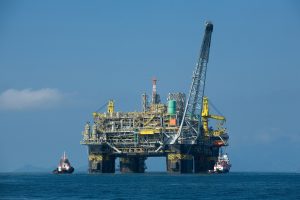
Illustrative image. Photo: Bexim, CC BY-SA 4.0, via Wikimedia Commons — source