Turkey Unveils $500 Billion Energy Plan to Cut Imports by 2040

Turkey’s energy minister, Alparslan Bayraktar, presented a new national roadmap on Thursday that targets $500 billion in combined public and private investment in the country’s energy infrastructure by 2040, with the stated goal of ending Turkey’s reliance on imported oil and gas. The plan, called “Milli Enerji 2040” (“National Energy 2040”), was unveiled in Ankara and covers everything from grid buildout and nuclear power to electric vehicles and energy efficiency.
A $70 Billion-a-Year Import Bill
The roadmap responds to a persistent weak point in Turkey’s economy: the country has recently spent up to $70 billion a year importing coal, oil and natural gas, according to figures cited alongside the plan’s launch. Turkey produces only a fraction of the fossil fuels it consumes, and energy imports have long been one of the largest drags on its current account.
Bayraktar framed the 2040 target as an effort to cover all of the country’s petroleum and natural gas consumption from domestic and alternative sources, a goal that leans heavily on expanding renewables, nuclear capacity and domestic gas production rather than on any single new discovery.
Where the Money Is Meant to Go
Turkish officials and local financial media who attended the launch put rough figures on parts of the plan, though the ministry has not published a full line-by-line breakdown. Reported allocations include around $100 billion for new solar and wind capacity and $116 billion for transmission and distribution grid upgrades, with Turkey’s state-owned energy companies expected to carry roughly $210 billion of the total investment. A parallel push on energy efficiency, intended to cut energy intensity by 40%, is projected to save the economy $240 billion over the life of the plan.
By 2040, the plan envisions total installed power capacity reaching 281 GW, up from a current base in the low hundreds of gigawatts, with electricity demand rising to around 680 TWh. Solar capacity alone is targeted at 112 GW and wind at 63 GW, which the ministry says would lift renewables’ share of installed capacity from 63% today to 77%.
Quadrupling Wind and Solar, Building Out Nuclear
The plan calls for roughly quadrupling combined wind and solar capacity to 175 GW by 2040. That would be a sharp acceleration from today: data cited by the ministry and compiled by energy think tank Ember show wind and solar supplied about 22% of Turkey’s electricity generation over the past year, with coal still the single largest source at roughly 34%.
Nuclear power is also central to the roadmap, with a target of 10 GW of installed capacity by 2040. Turkey’s first nuclear plant, the Russian-built Akkuyu facility on the Mediterranean coast, is rated at 4,800 MW once all four of its VVER-1200 units are running and is expected to cover roughly 10% of national electricity demand on its own. Getting to 10 GW implies at least one more large nuclear complex beyond Akkuyu, and Turkish officials have in the past floated additional sites on the Black Sea coast and in Thrace, though the ministry has not formally confirmed locations or timelines for a second project.
Jobs, EVs and the Wider Diplomatic Push
The ministry is pitching the plan partly on jobs: officials cited an estimate of about 108,000 direct positions created by the investment programme. On transport, the roadmap sets a target of 20 million electric vehicles on Turkish roads by 2040 — an ambitious jump from a base that already made Turkey the fourth-largest EV market in Europe last year, with roughly 190,000 fully electric vehicles sold, or 17% of new car purchases, according to Ember.
Milli Enerji 2040 arrives alongside a run of concrete deals that give some of its targets a head start. Turkey and South Korea signed a nuclear financing arrangement in early November, and Ankara has separately agreed with Washington to study a slate of small modular and next-generation reactor designs — both relevant to the plan’s 10 GW nuclear target. Turkey’s existing solar incentive schemes already feed into the renewables build-out the plan is counting on. On the grid side, questions remain about whether Turkey will host or simply be bypassed by a planned Black Sea subsea cable that would carry Azerbaijani renewable power straight to Europe, a project that touches on the same transmission ambitions the new plan lays out domestically.
What the Plan Leaves Unanswered
Bayraktar’s own public statements on long-term energy investment have shifted in scale over the past year: he has at various points cited a $200 billion target for the energy transition through 2035 and a separate figure of more than $300 billion for combined energy and mining investment to 2040. The $500 billion figure unveiled this week is the most comprehensive version to date, but the ministry has not released the full supporting document, and it remains unclear how much of the total represents new commitments versus investment that was already planned under existing programmes such as the YEKA renewable auctions. Financing sources — how much comes from the state budget, state enterprises, or foreign and private capital — have also not been broken down in detail.
Sources
- Alparslan Bayraktar (Turkish Minister of Energy and Natural Resources), “Milli Enerji 2040” presentation, Ankara, Nov. 5, 2026 — plan targets, capacity and investment figures.
- Oilprice.com, “Turkey Unveils $500 Billion Energy Plan Built on Gas, Solar, Nuclear,” Nov. 5, 2026 — import bill, investment breakdown, EV and generation-mix data (citing Ember and Reuters).
- Dunya.com, “Bakan Bayraktar açıkladı: Türkiye’nin 2040 enerji hedefi belli oldu,” Nov. 5, 2026 — capacity and renewable-share targets.
- Akkuyu Nuclear (akkuyu.com) — Akkuyu plant capacity and expected share of national demand.
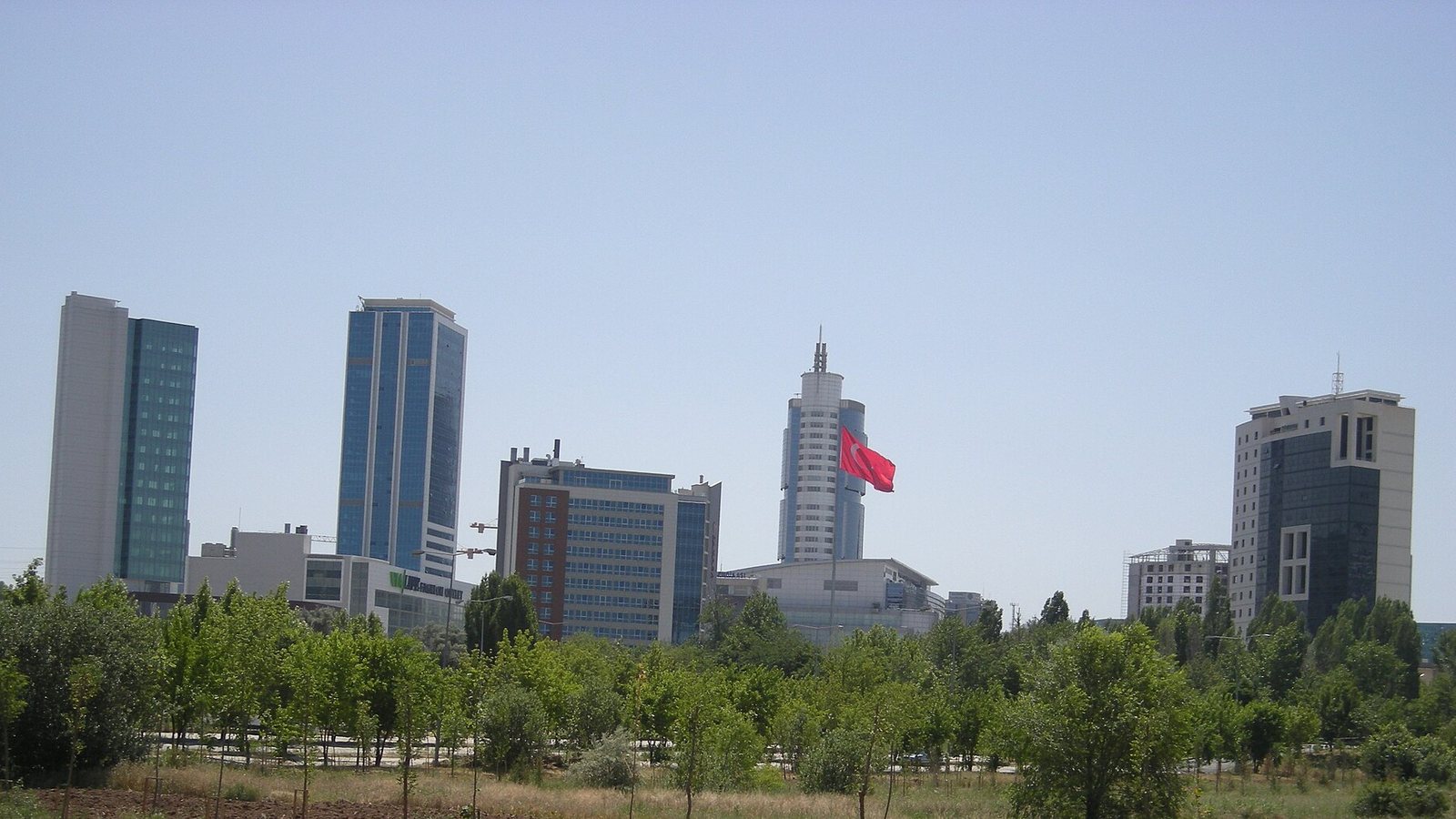
Illustrative image. Photo: Charismaniac, CC BY-SA 3.0, via Wikimedia Commons — source