QatarEnergy Explained: LNG Giant and Global Strategy

QatarEnergy is the state-owned energy company of Qatar and one of the most important producers and sellers of liquefied natural gas (LNG) in the world. It runs the country’s oil and gas upstream, liquefaction, shipping-related partnerships, petrochemicals and fertiliser interests, and it is expanding abroad through investments in LNG supply and export projects. This profile explains where the company came from, what it does, how it makes money and where it is heading.
QatarEnergy at a Glance
The company is headquartered in Doha and wholly owned by the State of Qatar. Its chief executive has also served as Qatar’s minister of state for energy affairs, which shows how closely corporate and national energy policy are linked. Because it is state-owned, QatarEnergy does not publish the kind of quarterly results that listed oil companies do, so most public information comes from official announcements and partner disclosures.
- Former name: Qatar Petroleum, renamed QatarEnergy in 2021.
- Ownership: 100 percent State of Qatar.
- Core business: natural gas, LNG, crude oil, natural gas liquids, helium, petrochemicals and fertilisers.
- Main hub: Ras Laffan Industrial City on the northeast coast.
- Resource base: the North Field, shared with Iran, where it is called South Pars.
History and Ownership
Qatar’s oil industry began in the 1930s and 1940s with foreign concessions, and the country took control of its resources in stages during the 1970s. The state company was created in 1974 and later became Qatar Petroleum. The discovery of the North Field in the early 1970s proved decisive: it turned a modest oil producer into one of the world’s leading gas nations.
From gas discovery to LNG exporter
Qatar built its LNG industry from the 1990s, with the first export cargoes leaving in the late 1990s. Two main LNG operating companies, Qatargas and RasGas, were later combined under a single entity, now known as QatarEnergy LNG. Foreign majors such as ExxonMobil, Shell, TotalEnergies and ConocoPhillips are long-standing partners in many of these ventures, while the state keeps majority control.
In 2019 Qatar left OPEC to focus on its gas strategy, a rare case of a member exiting the group. It remains a major oil and condensate producer in absolute terms, but gas is the core of its identity as an exporter.
Core Business and Revenue Drivers
QatarEnergy earns most of its revenue from LNG sold under long-term contracts, mainly to buyers in Asia and Europe. The pricing in those contracts is frequently linked to oil prices or to gas hub benchmarks, which ties earnings to commodity markets even though volumes are stable. Smaller but important streams come from:
- Crude oil and condensate, including offshore fields.
- Natural gas liquids, including propane and butane, plus sulphur.
- Helium, where Qatar is among the leading global suppliers.
- Petrochemicals and fertilisers through affiliated companies.
The long-term contract model gives the company predictable cash flow, which in turn funds the state budget and large capital projects.
Key Assets, Projects and Markets
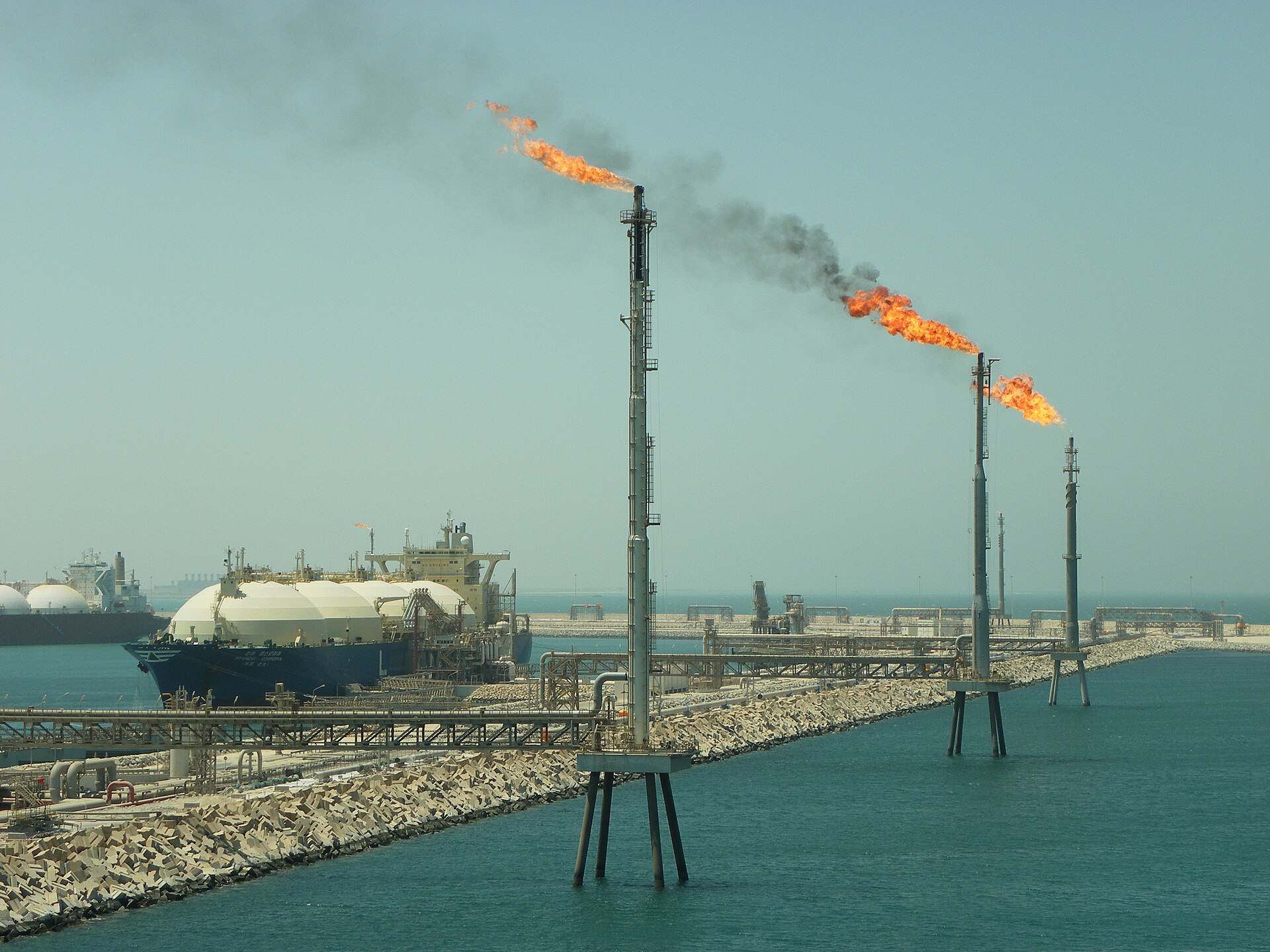
The centrepiece is Ras Laffan, an industrial city with LNG trains, gas processing, port facilities and associated industries. LNG leaves in specialised carriers; the Q-Flex and Q-Max classes were designed for Qatar’s trade and are among the largest LNG ships built.
The North Field expansion
The company has announced a staged expansion of the North Field, in East, South and West phases. The stated aim is to lift Qatar’s annual LNG production capacity from about 77 million tonnes to well over 120 million tonnes once the later phases are complete. Capacity targets and start-up timings are set by the company and its partners and can shift, so readers should check the latest official announcements for current status.
The expansion matters for buyers because new trains are designed with lower emissions in mind, including carbon capture at some units, and because the volumes are largely contracted to customers in Asia and Europe under long-term agreements.
Projects outside Qatar
QatarEnergy has also taken stakes in overseas upstream blocks and LNG developments. One notable example is the Golden Pass LNG project on the US Gulf Coast, a venture with ExxonMobil in which QatarEnergy holds the larger share. Such projects diversify supply sources and give the company a foothold in markets where long-term supply deals are being signed.
How the LNG Chain Works
Understanding the company means understanding the LNG value chain. Gas is produced offshore from the North Field and piped to Ras Laffan. There it is treated to remove water, acid gases and heavier hydrocarbons, then cooled to about minus 162 degrees Celsius, at which point it becomes a liquid roughly 600 times smaller in volume. The liquid is stored in insulated tanks and loaded onto carriers that deliver it to regasification terminals in importing countries. Each link, from drilling to shipping to regasification, is a separate business, and QatarEnergy and its partners are active in several of them.
Financial Performance and Scale
Exact financial figures for QatarEnergy are not published in a standard annual report in the way they are for listed companies, so independent estimates should be treated carefully. What is clear is the scale: gas and LNG exports are the backbone of Qatar’s economy and a key source of revenue for the sovereign wealth fund, the Qatar Investment Authority, which is a separate institution.
| Item | What is publicly known |
|---|---|
| Ownership | Wholly state-owned |
| LNG capacity | Among the largest in the world; expansion plans announced |
| Contract model | Mostly long-term sales and purchase agreements |
| Shipping | Large fleet operated through the affiliated company Nakilat |
| Reporting | Company announcements; no standard listed-company results |
Competition is changing. The United States became the largest LNG exporter in recent years, and Australia, Russia and new projects in Africa also supply the market. Qatar’s advantage remains its low-cost, large, concentrated resource base.
Strategy and the Energy Transition
QatarEnergy argues that natural gas will remain essential for decades as a cleaner alternative to coal, and it plans to keep growing LNG supply. At the same time it has announced ambitions to reduce emissions intensity, including large-scale carbon capture and storage at new LNG trains, and to invest in solar power and lower-carbon products such as blue ammonia.
Critics note that expanding gas supply and reducing emissions are not easily reconciled, and the pace of global gas demand growth is a matter of debate among analysts. Buyers in Europe and Asia are watching both the price and the carbon intensity of LNG, so the company’s emissions performance will increasingly affect contract negotiations.
Jobs and Careers at QatarEnergy
The company recruits engineers, geoscientists, operators, finance and legal specialists, and many roles are advertised on its official careers pages. Qatar has a policy of developing national talent, so some positions give priority to Qatari nationals. Expatriate professionals are hired where specialist skills are required, and packages usually include housing or allowances. Check official channels for current openings rather than relying on third-party listings.
Frequently Asked Questions About QatarEnergy
What was QatarEnergy called before?
It was called Qatar Petroleum until the company adopted the name QatarEnergy in 2021 to reflect a broader energy portfolio.
Who owns QatarEnergy?
The State of Qatar owns it entirely. International companies take part through joint ventures on individual projects.
Is QatarEnergy a member of OPEC?
No. Qatar left OPEC in 2019, and QatarEnergy operates independently of the organisation’s quotas.
Where does the company produce its gas?
Mostly from the North Field offshore, with LNG processed and exported from Ras Laffan.
Does QatarEnergy sell only LNG?
No. It also sells crude oil, condensate, natural gas liquids, helium, petrochemicals and fertilisers.
Conclusion
QatarEnergy is a state-owned gas powerhouse whose scale in LNG gives Qatar a strong position in global energy markets. Its future depends on delivering the North Field expansion, managing competition from other LNG exporters and showing credible progress on emissions. For readers tracking gas markets, it remains one of the key companies to follow, and its official announcements are the most reliable source for project status.
Sources and further reading
- QatarEnergy official website and press releases: qatarenergy.qa
- International Energy Agency, gas market reports: iea.org
- International Gas Union, World LNG Report: igu.org
- Energy Institute, Statistical Review of World Energy: energyinst.org
- Nakilat, shipping company information: nakilat.com