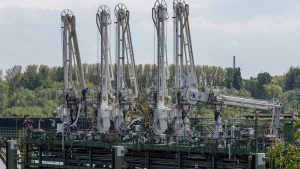
Chevron Company Profile: Business, History and Strategy

Chevron is one of the world’s largest integrated energy companies, with oil and gas production, refining, chemicals and a growing set of lower-carbon businesses. It is a publicly listed U.S. company with roots in California in the late nineteenth century, and today it operates across the Americas, Africa, Asia and Australia. This profile covers its history, ownership, main business lines, key assets, financial scale and strategy, in plain terms and without hype.
Chevron at a Glance
Chevron Corporation is listed on the New York Stock Exchange and is widely held by institutional and retail investors. It is one of the group of Western supermajors that also includes ExxonMobil, Shell, BP and TotalEnergies. In 2024, the company announced it would move its corporate headquarters from San Ramon, California, to Houston, Texas, reflecting where much of its business and leadership now sits.
| Item | Summary |
|---|---|
| Type | Publicly listed integrated oil and gas company |
| Main segments | Upstream (exploration and production) and downstream (refining, marketing, chemicals) |
| Headquarters | Houston, Texas, following the move announced in 2024 |
| Workforce | Roughly 45,000 employees in recent annual reports |
| Annual revenue | Around the 200 billion US dollar level in recent years (see the annual report for exact figures) |
Chevron History and Ownership
The company’s earliest ancestor was a small California oil business founded in the 1870s. After Standard Oil acquired it, the Chevron business emerged as Standard Oil Company of California when the Standard Oil trust was broken up by the U.S. Supreme Court in 1911. It expanded into Saudi Arabia in the 1930s, where a concession led to major discoveries and the creation of what later became Aramco.
Several large mergers shaped the modern company:
- Gulf Oil (1984): a major acquisition that greatly enlarged its reserves and refining network.
- Texaco (2001): a merger that briefly produced ChevronTexaco; the company returned to the Chevron name in 2005.
- Unocal (2005): added Asian geothermal and gas assets.
- Noble Energy (2020) and PDC Energy (2023): added Eastern Mediterranean gas and U.S. onshore production.
- Hess (2025): the acquisition was completed in July 2025 after a dispute over rights in the Guyana Stabroek project was resolved, adding Hess’s stake in offshore Guyana and Bakken assets.
Ownership is spread across large asset managers, pension funds and individual shareholders. No single shareholder controls the company.
Core Business and Revenue Drivers
Upstream
The upstream segment finds and produces crude oil, natural gas and natural gas liquids. It is the main profit driver when oil and gas prices are strong. Production costs, project timing and commodity prices decide results more than any other factor.
Downstream and chemicals
The downstream business refines crude into gasoline, diesel, jet fuel and lubricants, and sells them through branded retail stations and commercial customers. Chevron also owns half of Chevron Phillips Chemical, a joint venture with Phillips 66 producing petrochemicals such as ethylene and polyethylene. Downstream earnings tend to move against upstream earnings at times, which is one reason integrated companies exist.
Lower-carbon businesses
Chevron has a unit focused on renewable fuels, hydrogen, carbon capture and offsets, and related technologies. These remain a smaller part of capital spending than oil and gas.
Key Chevron Assets, Projects and Markets
Chevron operations are concentrated in a handful of large regions:
- Permian Basin (United States): a large shale oil and gas position in Texas and New Mexico, with many wells and relatively short project cycles.
- Gulf of America deepwater: long-life offshore platforms producing oil and gas.
- Kazakhstan: a stake in the Tengiz and Karachaganak fields, with Tengiz an enormous oil field developed through the Tengizchevroil venture.
- Australia: the Gorgon and Wheatstone LNG projects, major exporters to Asia.
- Guyana: following the Hess deal, an interest in the Stabroek Block offshore, one of the fastest-growing oil provinces in recent years.
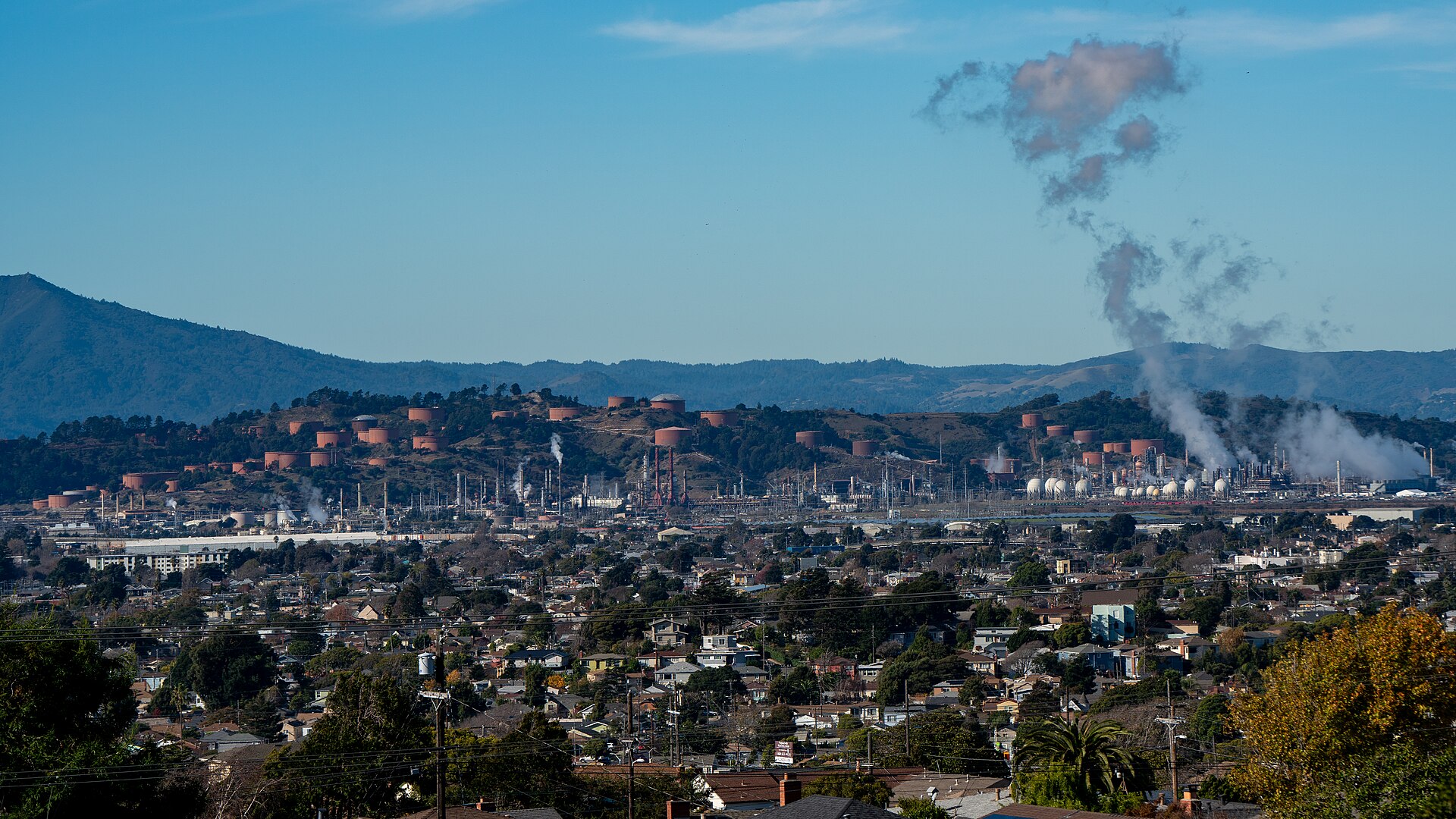
- Refineries: including Richmond in California and Pascagoula in Mississippi, plus interests in Asia.
Chevron also has long-standing operations in West Africa, especially Nigeria and Angola, and in the Eastern Mediterranean gas fields it inherited from Noble Energy.
How the segments fit together
An integrated model means one company owns several steps of the chain. Chevron produces crude, ships it, refines part of it in its own plants and sells products to consumers and businesses. When crude prices fall, refining margins can hold up, because the company buys its feedstock more cheaply. When crude prices rise, the upstream side gains. This natural offset does not remove risk, but it smooths results compared with a pure explorer or a pure refiner.
Natural gas and LNG are an increasingly important part of the mix. Long-term LNG contracts with buyers in Asia give the company steadier cash flow than spot sales alone, and they explain why the Australian projects matter so much to its portfolio.
Financial Performance and Scale
Chevron’s financial results swing with oil and gas prices. In years of high prices, it earns large profits and returns cash through dividends and share buybacks. In weaker years, it protects the dividend and slows capital spending. The company is widely known for its long record of dividend increases, which it highlights to investors.
For exact numbers, use the latest annual report and the Form 10-K filed with the U.S. Securities and Exchange Commission. Third-party sites often lag, and they may mix up revenue, earnings and cash flow. When comparing Chevron with other supermajors, check that you are using the same measure for all of them.
Chevron Strategy and the Energy Transition
Chevron’s stated strategy is to grow oil and gas output with disciplined spending, while building lower-carbon businesses where it believes it has an advantage. In practice, that means:
- Keeping high-return projects in the Permian, Guyana and Kazakhstan.
- Returning cash to shareholders.
- Investing selectively in carbon capture, hydrogen and renewable fuels.
- Cutting costs and simplifying the portfolio.
Critics argue that the pace of transition investment is too slow for climate goals. Supporters point to global demand for oil and gas, and to the need for reliable supply. Both views shape how investors, regulators and customers judge the company.
Jobs and Careers at Chevron
Chevron hires petroleum, mechanical, chemical and electrical engineers, geoscientists, data specialists, finance and supply-chain professionals, as well as operators and technicians at plants and offshore sites. It runs graduate and internship programmes, and it posts openings on its careers site. Pay depends heavily on location and role, so check current postings rather than relying on third-party figures.
Roles at Chevron fall into a few broad groups. Offshore and field roles involve rotational schedules, safety training and certifications. Refinery roles include process operators, maintenance technicians and reliability engineers. Corporate roles cover trading, finance, legal, procurement and digital teams. Many large projects, such as the ones in Kazakhstan and Australia, also create jobs for contractors and local suppliers, which is a significant part of the company’s economic footprint in host regions.
Frequently Asked Questions About Chevron
Is Chevron a supermajor?
Yes. It is one of the five Western oil supermajors, alongside ExxonMobil, Shell, BP and TotalEnergies.
Where is Chevron headquartered?
Chevron announced in 2024 that its headquarters would move from San Ramon, California, to Houston, Texas.
What does Chevron produce?
It produces crude oil, natural gas and natural gas liquids, refines fuels and lubricants, and makes petrochemicals through a joint venture.
Did Chevron acquire Hess?
Yes. The deal closed in July 2025, adding Hess’s interest in the Stabroek Block in Guyana and its Bakken assets.
Is Chevron investing in renewables?
It invests in renewable fuels, hydrogen and carbon capture, but these are a smaller share of spending than oil and gas.
Conclusion
Chevron combines upstream scale in the Permian, Guyana, Kazakhstan and Australia with refining and chemicals, and a smaller lower-carbon portfolio. Its history of large mergers explains its present size, and its results depend heavily on commodity prices and project delivery. To follow the Chevron story, watch production growth, capital discipline and how quickly its lower-carbon projects move from plans to revenue.
Sources and further reading
- Chevron Corporation, annual reports and investor relations materials (chevron.com)
- U.S. Securities and Exchange Commission, Chevron Form 10-K filings (sec.gov)
- U.S. Energy Information Administration, company and market data (eia.gov)
- International Energy Agency, oil and gas market analysis (iea.org)