Norway’s $2.35 Trillion Oil Fund Posts $30 Billion Loss in Third Quarter

Norges Bank Investment Management (NBIM), which runs Norway’s oil-funded Government Pension Fund Global, said on October 22 that the world’s largest sovereign wealth fund lost about $30 billion in the third quarter of 2026, as rising interest rates hit its bond holdings even as its energy-company stocks performed best of all.
The fund’s return came in at -0.5% for the quarter, NBIM said, trimming the portfolio’s total value to 22.014 trillion Norwegian kroner, or roughly $2.35 trillion, as of September 30. In dollar terms, the loss works out to close to $30 billion; in kroner, NBIM put it at 278 billion.
A Quarter That “Ended Slightly Negative”
“The fund’s return was close to flat, ending slightly negative,” Trond Grande, NBIM’s deputy chief executive, said in the statement announcing the results. He pointed to two offsetting forces: a weak quarter for fixed income and a resilient one for energy equities. “Rising interest rates led to weaker results on our fixed-income investments,” Grande said, while “energy companies rose the most,” as “interest-rate-sensitive sectors such as utilities and real estate fell.”
The fund held 72.1% of its assets in equities, 25.8% in fixed income, 1.6% in unlisted real estate and 0.5% in unlisted renewable-energy infrastructure at the end of the quarter, according to NBIM. That bond-heavy slice of the portfolio absorbed most of the damage: as central banks kept rates higher for longer, the market value of existing bonds fell, dragging down the fixed-income sleeve even as equities were roughly flat overall.
Energy Stocks Buck a Flat Market
Within the equity book, the split is telling for an energy-focused readership: energy companies were the best-performing sector of the quarter, NBIM said, while utilities and real estate — both sensitive to interest-rate moves — lagged. The fund does not break out a precise quarterly return by sector, but the pattern fits a period in which oil and gas majors have benefited from firmer crude and product prices, while rate-sensitive, capital-intensive utilities underperformed. The quarter’s gains in energy shares came as European gas producers pressed ahead with new projects: the UK approved Adura’s Jackdaw gas field after a two-year court fight, while Apollo joined the bidding race for Germany’s gas utility Uniper.
That energy exposure sits inside a fund whose own existence traces back to oil. The Government Pension Fund Global was set up in 1996 to invest Norway’s petroleum revenue abroad, insulating the domestic economy from swings in oil income and setting aside wealth for future generations. Decades later, the fund’s single-largest holdings are technology companies — Nvidia, Apple and Microsoft, per NBIM — a reminder of how far its portfolio has diversified beyond the industry that created it.
From a Record First Half to a Flat Quarter
The third-quarter dip follows a record first half of 2026, when the fund posted a $185 billion profit driven largely by a rally in Asian technology stocks. That run masked how exposed the portfolio has become to a handful of large-cap technology names, a concentration that lifted returns in the first half but did little to cushion the fund when bond markets turned in the third quarter.
NBIM’s renewable-energy infrastructure allocation remains small in relative terms — just 0.5% of the total portfolio — but it is one of the few sleeves tied directly to the energy transition rather than to the listed oil, gas and utility names that dominate the fund’s broader market exposure. Norway continues to produce and export oil and gas even as its sovereign fund diversifies away from direct exposure to the sector that financed it.
Sources
- Norges Bank Investment Management, third-quarter 2026 results statement, October 22, 2026 — fund return, asset allocation and Trond Grande quotes.
- OilPrice.com, “Norway’s $2.3 Trillion Oil Fund Loses $30 Billion in Third Quarter,” October 22, 2026 — loss figure, fund value and first-half profit context.
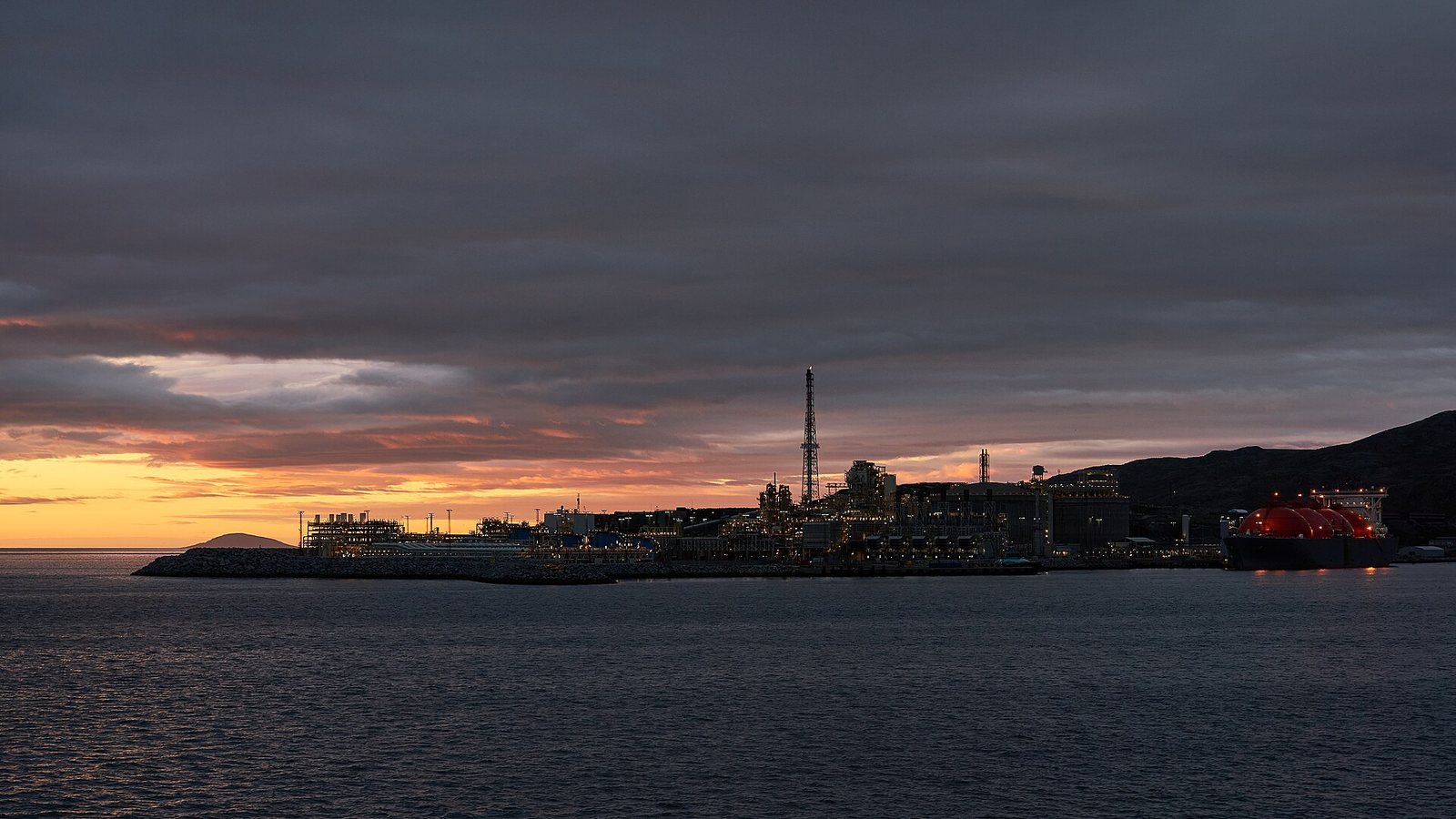
Illustrative image. Photo: Virtual-Pano, CC BY-SA 4.0, via Wikimedia Commons — source