US Data Center Power Demand to Keep Growing 38% a Year, Goldman Says — But Most of the Queue Won’t Get Built

Goldman Sachs expects US data-center electricity demand to keep growing by roughly 38% a year through 2027, adding about 12 gigawatts of new load this year and another 17 GW next year. But a separate analysis from Wood Mackenzie suggests the vast majority of the power that data-center developers have asked utilities to deliver — more than 1,000 GW of requests nationwide — will never actually be built, as grid operators grow sharper at weeding out speculative projects.
Goldman’s numbers: steady growth, not a blowout
In a research note earlier this month, Goldman Sachs raised its estimate of US data-center capacity at the end of 2026 by 5 GW to about 64 GW, while trimming its 2027 estimate by 5 GW to roughly 90 GW. The bank still expects demand to climb about 38% in each of 2026 and 2027, and it described its longer-range outlook as “largely unchanged” despite mounting public pushback against new projects in several states. The revisions reflect construction delays and permitting friction as much as any pullback in underlying AI investment, according to the note.
Why the queue is so much bigger than what gets built
The gap between what developers are asking for and what will actually be energized is enormous. Wood Mackenzie estimates that of roughly 1,066 GW of generation capacity that data-center developers have requested from US utilities and grid operators, only about 28% is likely to be committed to real projects; the rest, analysts say, reflects speculative site-banking by developers hedging their bets across multiple locations. Separate tracking by Global Energy Monitor puts the broader US data-center-linked power pipeline at about 378 GW, with projects still in the “announced” or “pre-construction” stage accounting for roughly 86% of that total — meaning most of it has not broken ground.
Grid planners describe this as the “phantom data center” problem: a single AI developer may file interconnection requests with several utilities for the same project, inflating queue totals well beyond what will ever be built.
Utilities start demanding proof before reserving power
In response, US utilities and grid operators are increasingly requiring data-center developers to show binding financial commitments — larger upfront deposits, longer-term contracts, collateral and non-refundable engineering study fees — before reserving capacity for them. The aim, according to industry commentary, is to filter out projects that are not far enough along to justify the transmission and generation investment they would otherwise trigger. A National Grid Partners survey of utility innovation leaders published in September found 74% saying AI-driven data-center load growth is already affecting grid reliability planning.
FERC moves to referee the surge
The Federal Energy Regulatory Commission is separately drafting a proposal that would expand its authority over how the country manages this surge in demand, as state regulators, utilities and federal agencies currently split jurisdiction over data-center interconnections in ways that can slow or distort decisions. The move follows FERC’s rejection of the core of PJM’s own plan for connecting large data centers to the grid, reported by The Daily Energy on 16 October, which has left the country’s largest grid operator without a settled framework just as demand keeps climbing. PJM, ERCOT and SPP all set summer peak-load records in 2026, according to EIA data, underscoring how little slack is left in several major US grids even before new AI load arrives in volume.
The fights playing out this week
The tension between fast-growing demand and a slower-moving grid is visible in disputes The Daily Energy has covered this week. Minnesota’s attorney general has objected to a proposed deal between Google and Xcel Energy for a data-center connection in Pine Island, arguing it could shift costs onto other ratepayers. In Indiana, utilities are instead trying to pair new AI load directly with new generation: X-energy, AEP and Amazon are studying a 960 MW small modular reactor plant at a retired coal site, and Indiana utility Hoosier Energy has signed an MoU with AtkinsRéalis to weigh up to 6 GW of Candu reactors for future data-center demand.
Sources
- Goldman Sachs Research, client note on US data center power demand, 4–5 October 2026, as reported by Cryptobriefing, Finimize and U.S. News/Reuters.
- Wood Mackenzie, analysis of US data center interconnection requests, cited by EnergyConnects, “Most power sought for US data centers will never materialize,” August 2026.
- Global Energy Monitor, US data center power pipeline tracking, cited by Axios, 26 August 2026.
- National Grid Partners, 2026 Utility Innovation Survey, 18 September 2026.
- Fastmarkets, Climate Week NYC panel coverage on grid equipment bottlenecks.
- qz.com, reporting on FERC’s data center interconnection rulemaking.
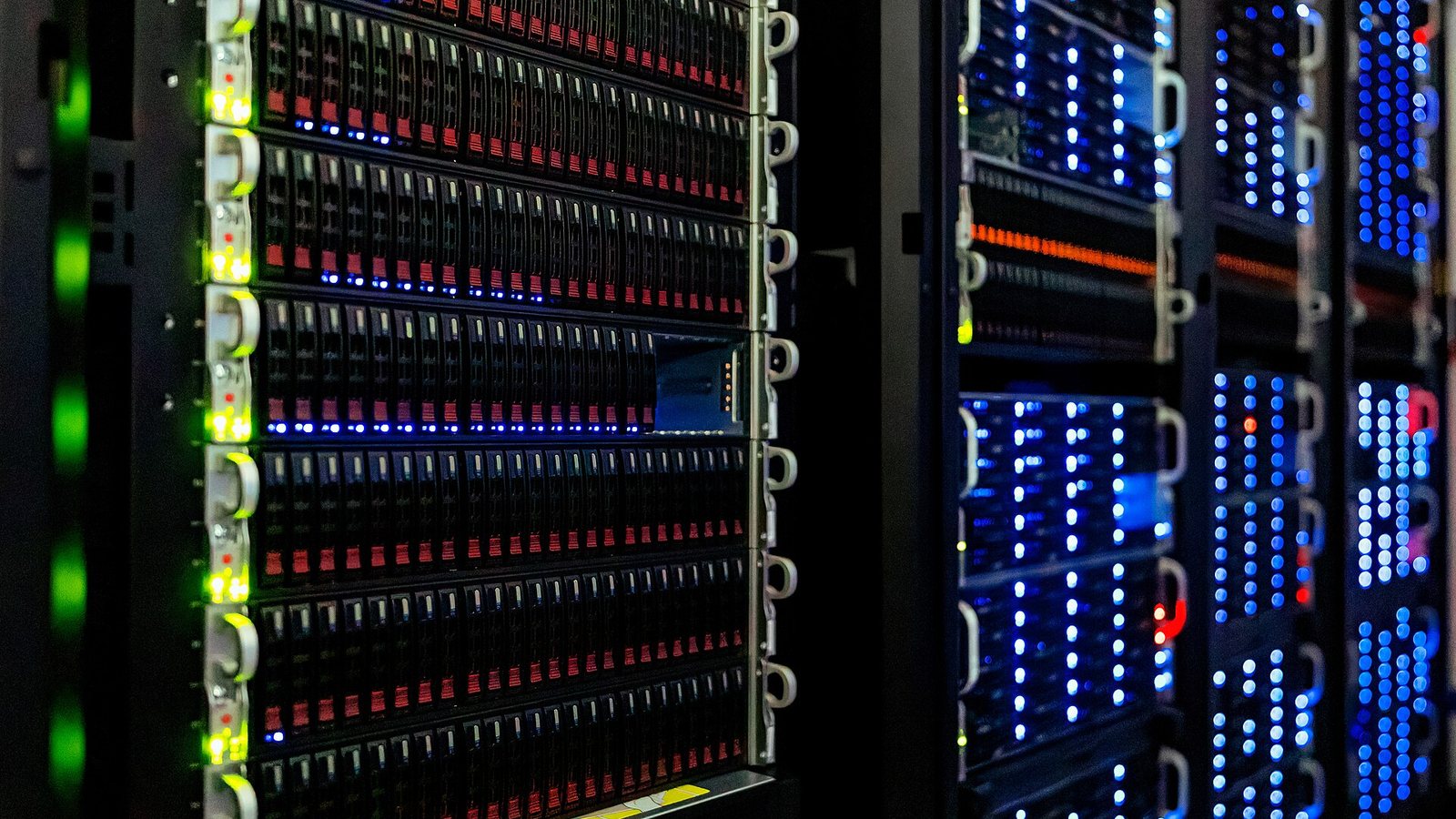
Illustrative image. Photo: NOIRLab/NSF/AURA/T. Slovinský, CC BY 4.0, via Wikimedia Commons — source