


EIB Adds €20 Million to Austria’s Burgenland Energie as Wind and Solar Push Toward 2030 Independence Goal
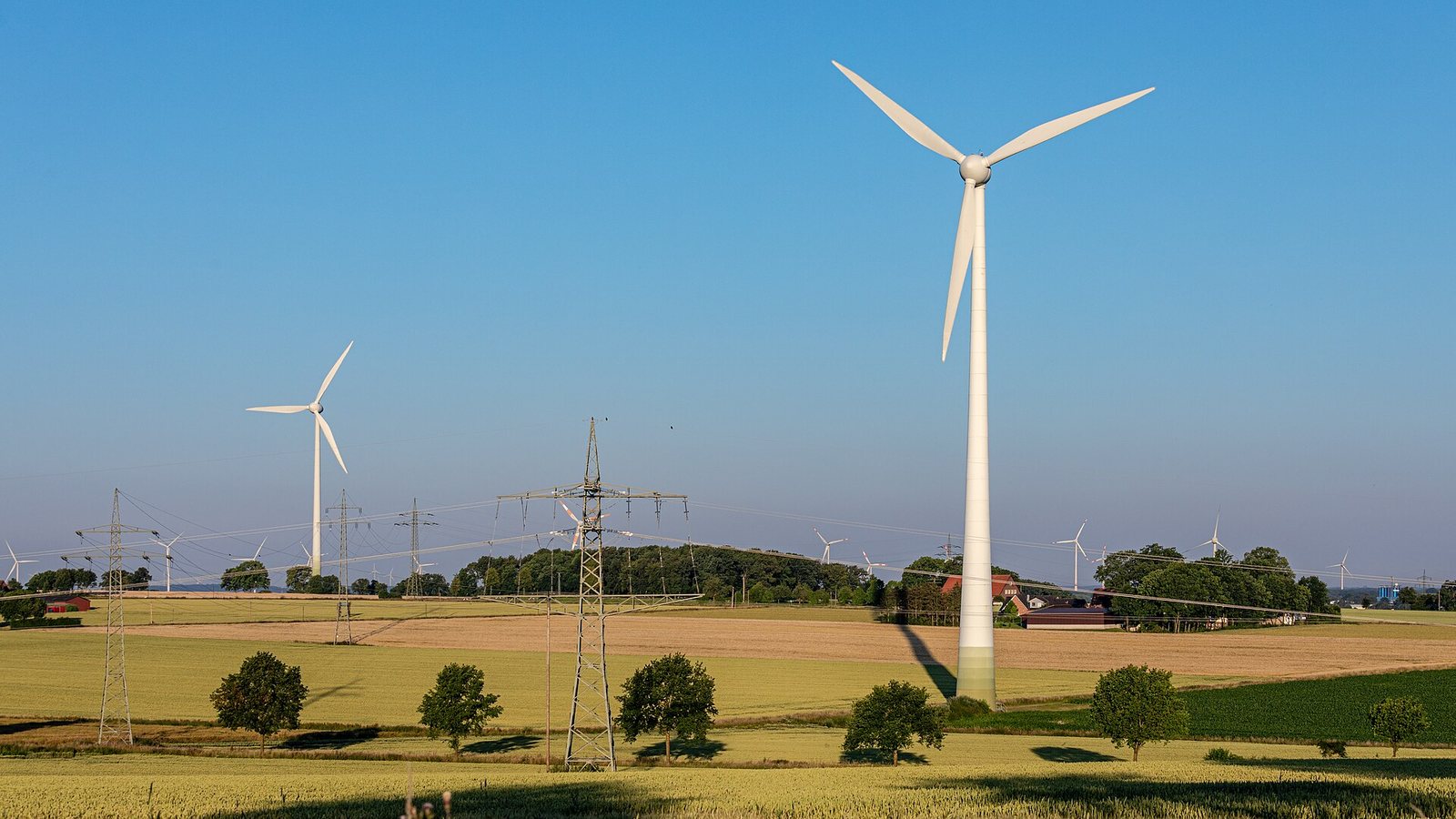

The European Investment Bank said this week it is adding €20 million to its financing for Burgenland Energie, Austria’s largest wind and solar developer, as the company pushes toward a goal of full energy independence for the eastern Austrian state by 2030. The new tranche builds on a €250 million EIB loan granted roughly a year earlier for the same expansion program, and comes alongside €100 million in related financing that the EIB has backed from Erste Bank and Landesbank Baden-Württemberg.
What the money is for
Burgenland Energie is targeting up to 2,000 additional megawatts of wind and solar capacity by 2030, a figure the EIB says is equivalent to roughly 20% of Austria’s current total wind and solar capacity. The expansion sits inside a wider build-out covering around 40 sites across Burgenland, with total investment for the program estimated at about €1.5 billion. Burgenland, a largely rural state on Austria’s border with Hungary, has built its wind and solar fleet over more than two decades and is now trying to add storage and grid capacity fast enough to keep pace with new generation.
From 50% to 75% energy-independent in five years
According to Burgenland Energie, the state was about 50% energy-independent five years ago and has since reached roughly 75%, with the remaining gap to be closed by the new wind and solar capacity this financing is meant to fund. The company frames 2030 full independence — producing as much energy locally as the state consumes on an annual basis — as an unchanged target despite the scale of construction still required. Burgenland Energie chief executive Stephan Sharma has pointed to that trajectory as evidence the 2030 goal remains achievable, though the company has not published a site-by-site construction schedule showing how the remaining 25 percentage points will be closed.
A syndicate of banks and insurers
Beyond the EIB and its two financing partners, the broader Burgenland Energie program has drawn backing from UniCredit Bank Austria, Raiffeisen Bank International, insurer Wiener Städtische and Germany’s Talanx Group, according to the EIB. The mix of a multilateral development bank, commercial lenders and an insurer reflects a financing structure increasingly common in European renewables, where projects combine lower-cost public financing with commercial debt and, in some cases, insurance-linked capital to spread risk across more than a dozen individual wind and solar sites rather than financing each one separately.
Framed as a REPowerEU test case
The EIB is extending the new loan under the European Union’s InvestEU programme, and both the bank and Burgenland Energie have framed the financing as advancing REPowerEU, the EU’s plan to cut dependence on imported fossil fuels and accelerate renewable deployment after Russia’s full-scale invasion of Ukraine disrupted European gas supply in 2022. EIB Vice-President Karl Nehammer said, according to the bank, that financing of this kind is “making Europe’s energy independence a reality” — language that positions the Burgenland program as a model the EIB wants to replicate elsewhere in the bloc, where solar is on track to become the single largest source of power generation worldwide from 2031, according to a separate industry outlook published this year.
A regional buildout, not a single project
Unlike a single utility-scale wind or solar farm with one point of commercial operation, Burgenland Energie’s 2,000 MW target is spread across dozens of sites of varying size, most still under development or construction rather than fully permitted and financed individually. That structure makes the program harder to track against a single completion date, but it also means delays or cost overruns at any one site are less likely to derail the state’s overall 2030 target than a setback would be for a single large project such as Romania’s VIFOR wind farm, where Rezolv Energy has had to bring capacity online in discrete phases.
Sources
- The Brussels Times, "€20m EU loan to expand wind and solar power in Austria’s Burgenland," October 13, 2026 — for the loan amount, prior EIB financing, partner banks, capacity target and the Nehammer quote.
- Renewable Energy Magazine, "EIB steps up financing for major Austrian wind and solar project," October 13, 2026 — for Burgenland Energie’s energy-independence trajectory and the InvestEU/REPowerEU framing.
Illustrative image. Photo: Dietmar Rabich, CC BY-SA 4.0, via Wikimedia Commons — source


