Batteries and Gas Add 26.2 GW of Winter Grid Capacity Across North America, NERC Finds


Battery storage and gas-fired generation added 26.2 GW of on-peak winter capacity across North America over the past year, a 2.4% increase, according to the North American Electric Reliability Corporation’s 2026-2027 Winter Reliability Assessment. The grid watchdog says the additions have improved the overall outlook heading into this winter, but it is still flagging risk in a number of regions if a prolonged cold snap coincides with tight natural gas supply.
Batteries keep doing the heavy lifting
The 26.2 GW figure continues a multi-year pattern in which battery storage, rather than new conventional power plants, has supplied most of the net new winter capacity on the US and Canadian grids. In NERC’s prior assessment, covering the 2025-2026 season, battery storage alone accounted for 19,659 MW of new capacity, versus just 1,335 MW from new generators. That shift mirrors what this outlet has tracked deal by deal this year, from X-ELIO’s 590 MW battery order across the US and Australia to the battery project nearing completion at an Estonian solar park, each one adding incrementally to the same capacity pool NERC is now measuring at a continental scale.
The gas-supply caveat
NERC’s assessment does flag a specific weak point: generators that run on natural gas but lack firm, long-term fuel contracts. According to NERC officials cited in the assessment, those single-fuel units may be unable to run during a cold snap, when residential and commercial heating demand pulls gas away from power plants and local distribution systems take priority over generators buying fuel on the spot market. The risk is not new, but it has taken on more weight as gas-fired capacity keeps growing alongside batteries, and as the US Department of Energy’s emergency orders keeping older coal units like Michigan’s Campbell plant running through the winter show regulators are already treating fuel and capacity shortfalls as a live concern rather than a hypothetical one.
Demand is the harder problem
The more persistent challenge, in NERC’s telling, is not supply but demand. The assessment projects higher winter peak demand in 21 of the 23 regions it covers, a trend it attributes primarily to data center growth and broader electrification rather than to population growth or weather alone. That demand growth is part of why utilities and grid operators have been racing to add any dispatchable or storable capacity they can, a dynamic that has also shown up in debates over how capacity factor is measured and compared across technologies as batteries, gas and renewables are increasingly judged side by side on the same reliability metrics.
Taken together, NERC’s assessment describes a grid that is adding capacity faster than in recent years, largely thanks to batteries, but doing so against a backdrop of demand growth that keeps outrunning those additions in all but two of its assessment areas. That combination, rather than any single plant or technology, is what will determine how the next sustained cold spell plays out across North America’s grids.
Sources
- North American Electric Reliability Corporation, 2026-2027 Winter Reliability Assessment — capacity-addition and regional demand figures.
- Utility Dive, “NERC: Batteries, gas helped add 26.2 GW to peak resources since last winter,” November 2026 — reporting on the new assessment.
- PublicPower.org, summary of NERC’s 2026-2027 Winter Reliability Assessment — regional demand-growth figures and overall outlook.
- Power Magazine, reporting on NERC’s 2025-2026 Winter Reliability Assessment — prior-year battery versus generator addition figures, used here for year-on-year context.
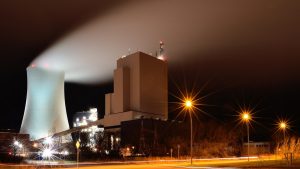
Illustrative image. Photo: Frans Berkelaar, CC BY 2.0, via Wikimedia Commons — source