Equinor Finds New Gas at Nearly 40-Year-Old Gullfaks Field

Equinor and its partners Petoro and OMV have found gas at the Gullfaks South field in the Norwegian North Sea, Equinor said on Thursday, adding an estimated 3.3 million to 10.3 million barrels of oil equivalent to a field that has been producing since December 1986.
A cheap sidetrack, not a new well
The discovery came from exploration well 34/10-D-4 BH, drilled as a sidetrack off an existing production well using the Askeladden rig, rather than from a standalone exploration campaign. Equinor put the recoverable volume at 0.5 to 1.6 million standard cubic metres of oil equivalent, or roughly 3.3 million to 10.3 million barrels.
Gunnar Egge, Equinor’s vice president for the Gullfaks field, said the size of the find was notable given how little it cost to drill. “It is very positive that it is possible to make discoveries of this size with such cost-effective exploration wells,” he said, adding that the volumes would be profitable barrels that help “maintain activity and production on the Gullfaks field.”
The well sits inside the existing Gullfaks production licence, so ownership of any gas produced follows the licence’s current split: Equinor holds 51%, state-owned Petoro 30%, and Austria’s OMV the remaining 19%, according to Norwegian Petroleum, the information service run jointly by the Norwegian Offshore Directorate and the Ministry of Energy.
Keeping a four-decade-old field alive
Gullfaks was discovered in 1978 under Norway’s first licence awarded to a wholly domestic group — Statoil, Norsk Hydro and Saga Petroleum — and came on stream in December 1986 as the first field Statoil, Equinor’s predecessor, operated on its own. Three concrete platforms, Gullfaks A, B and C, were brought online between 1986 and 1989, and the field has produced roughly 2.6 billion barrels of oil in its first three decades. In 2019, Norwegian regulators approved extending Gullfaks’s producing life to 2036, and tie-in discoveries like this one are part of how Equinor intends to fill that extended window.
It is the second piece of Norwegian North Sea news from Equinor this week: the company separately raised its cost estimate for the unrelated Snøhvit Future project in the Barents Sea to NOK 26.5 billion, a reminder that on the Norwegian shelf, cheap infill finds at old fields and costly overhauls of newer infrastructure are running in parallel.
Small finds, big role in mature-basin economics
Discoveries this size would barely register in a frontier basin, but on a field already tied into producing platforms, pipelines and processing trains, every incremental barrel avoids the cost of new infrastructure. Operators across the Norwegian and UK continental shelves have increasingly leaned on exactly this kind of infill and sidetrack drilling — cheaper and faster than exploration wells into new structures — to slow the decline of fields decades past their original design life. Equinor did not say when gas from the new find would reach the Gullfaks processing facilities or disclose a cost for the well.
Sources
- Equinor, “Gas discovery at the Gullfaks field in the North Sea,” press release, 8 October 2026 (well, volume and quote details) — equinor.com
- Offshore Energy, “Fresh North Sea gas discovery yields up to 10 million barrels of oil equivalent,” 8 October 2026 (independent confirmation) — offshore-energy.biz
- Norwegian Petroleum (norskpetroleum.no), field page for Gullfaks (discovery year, startup date, ownership stakes, 2019 life-extension approval) — norskpetroleum.no
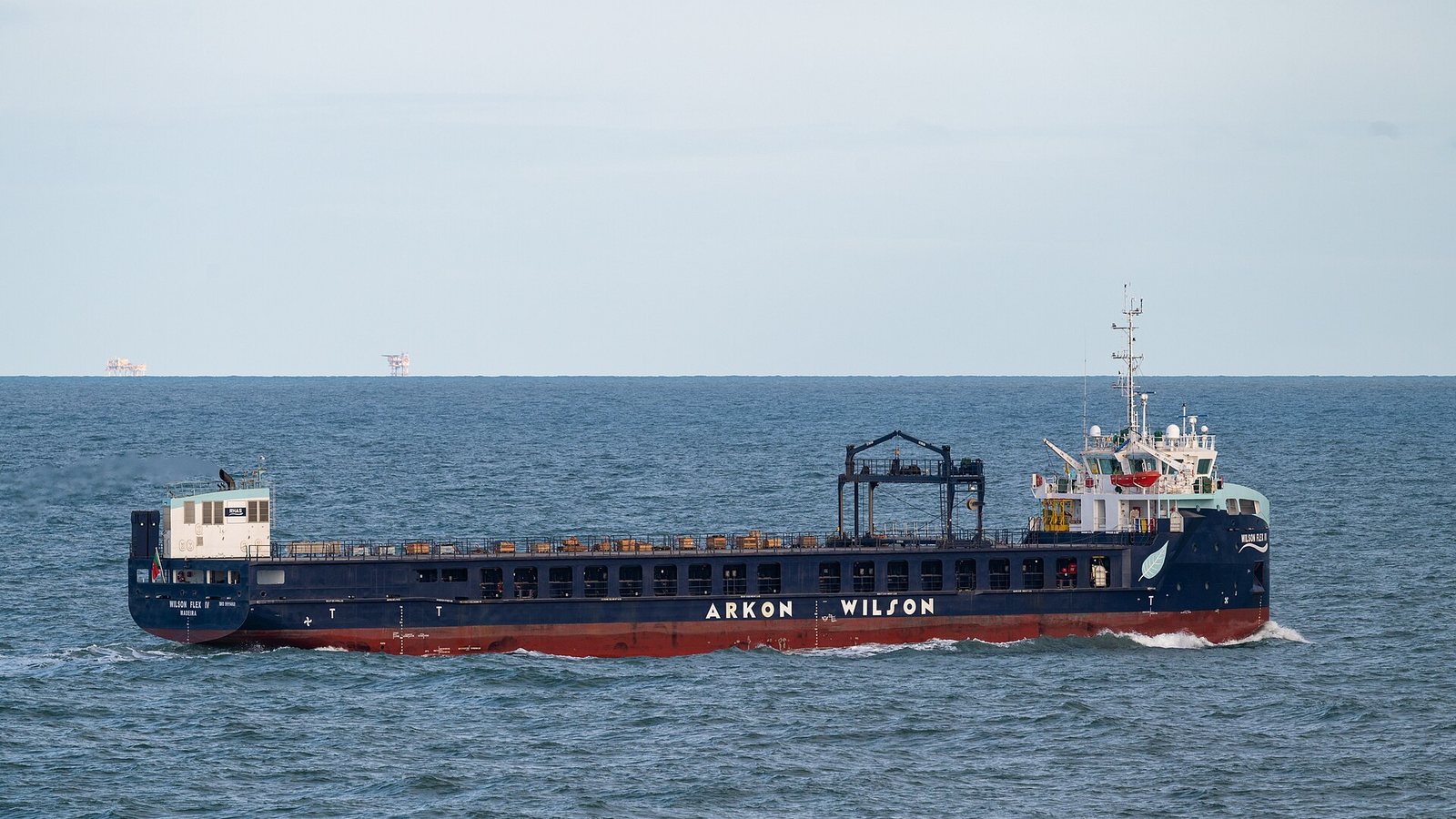
Illustrative image. Photo: GRDN711, CC BY 4.0, via Wikimedia Commons — source